

Cloud computing has become one of the most important technologies shaping the modern digital world. From storing photos on mobile phones to running global businesses online, cloud technology is everywhere. Yet many people still do not fully understand what cloud computing is or why it is so important for the future.
As we move forward, cloud computing will continue to power innovation, remote work, online services, and digital security. This article explains cloud computing in simple terms, why it matters, and how it is shaping the future of technology for individuals and businesses alike.
What Is Cloud Computing in Simple Words
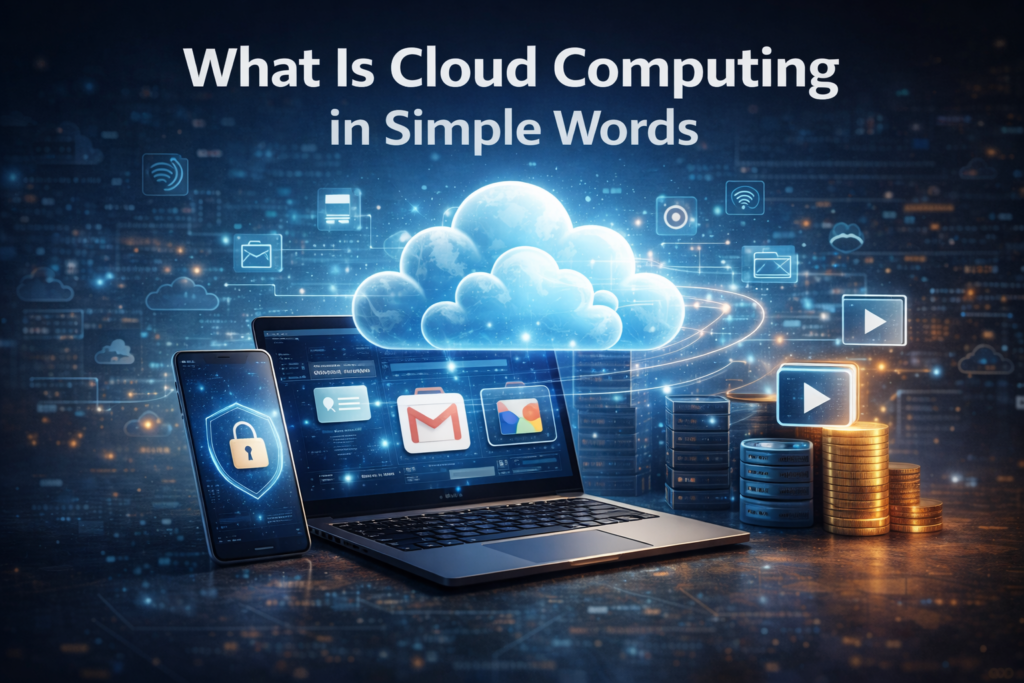
Cloud computing means using the internet to store data, run software, and access services instead of relying on a single physical computer or local server. Rather than saving files on your own device, cloud technology allows data to be stored on secure remote servers that can be accessed anytime, from anywhere.
Common examples of cloud computing include online email services, file storage platforms, video streaming, and web-based business tools. The biggest advantage of cloud computing is flexibility. Users can access their data and applications without being tied to a specific device or location.
How Cloud Computing Is Used in Everyday Life
Many people use cloud services daily without realizing it. Cloud computing has quietly become part of routine digital activities.
Cloud Computing on Smartphones and Personal Devices
When you back up photos, sync contacts, or access emails on multiple devices, you are using cloud computing. These services keep data safe and available even if a device is lost or damaged.
Cloud Services for Work and Online Collaboration
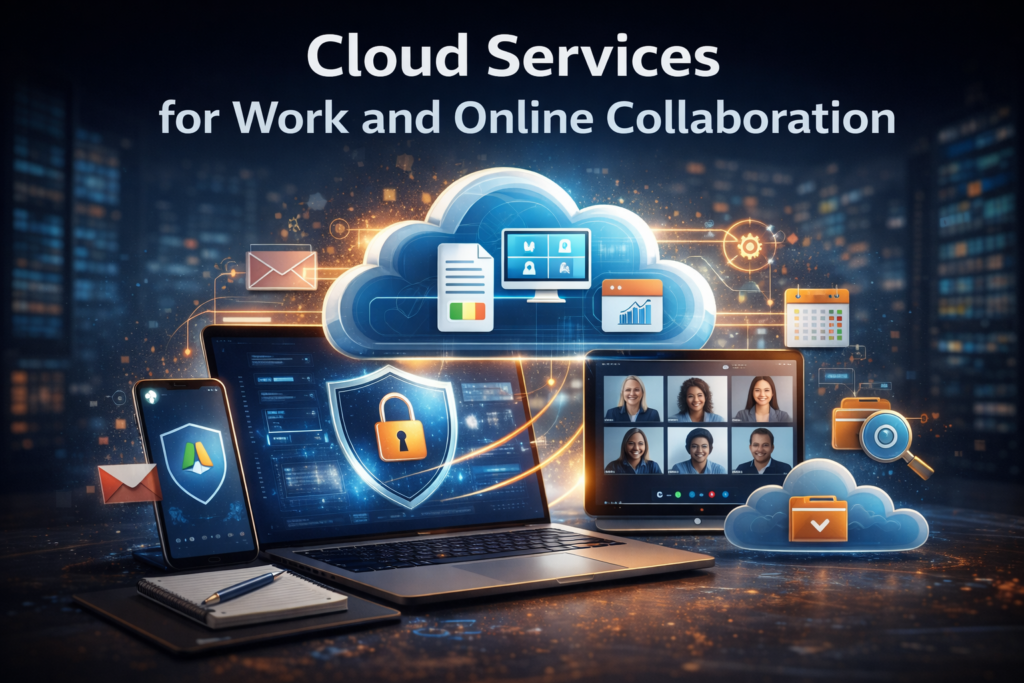
Remote work relies heavily on cloud platforms. Teams share files, attend virtual meetings, and manage projects through cloud-based tools. This has made collaboration easier, faster, and more efficient than traditional office systems.
Types of Cloud Computing Services
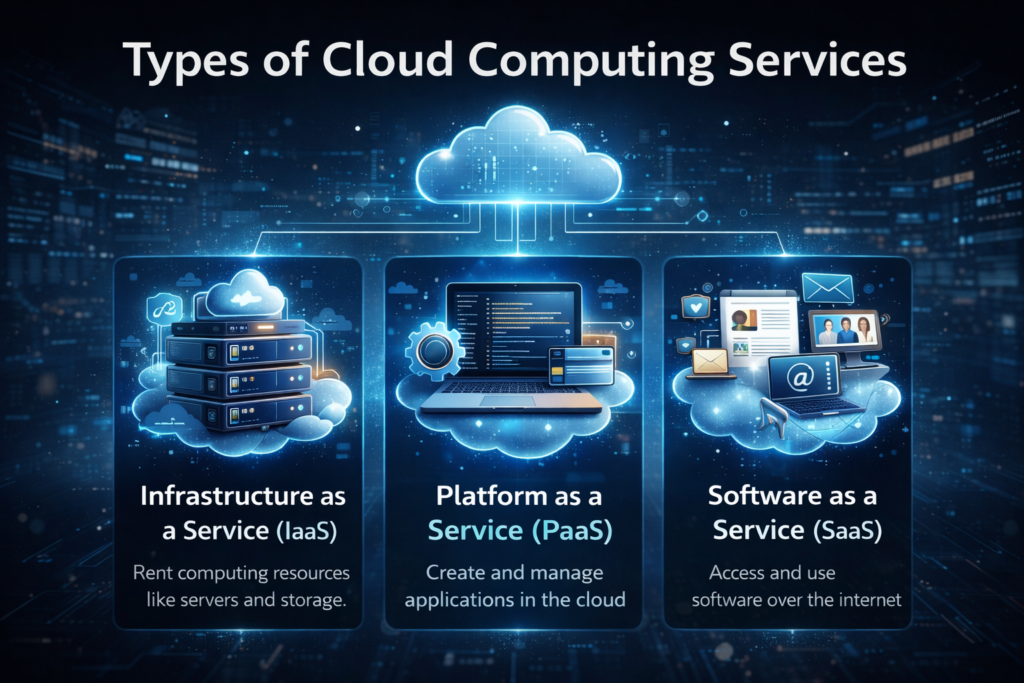
Cloud computing is not a single service. It includes different models designed for different needs.
Public Cloud
Public cloud services are shared platforms available to individuals and businesses. They are cost-effective and easy to use, making them ideal for startups and personal use.
Private Cloud
Private cloud systems are designed for a single organization. They offer greater control and security, often used by companies handling sensitive data.
Hybrid Cloud
Hybrid cloud combines public and private systems. It allows organizations to store critical data privately while using public cloud resources for flexibility and scalability.
Why Cloud Computing Matters for the Future
Cloud computing plays a critical role in shaping future technology. It supports innovation, scalability, and digital transformation across industries.
As data usage grows, traditional storage methods become inefficient. Cloud technology allows systems to scale instantly without expensive hardware upgrades. This flexibility is essential for emerging technologies such as artificial intelligence, big data analysis, and smart applications.
Cloud computing also enables faster development and deployment of digital products, helping businesses adapt quickly to changing market demands.
Cloud Computing and Business Growth
Businesses of all sizes benefit from cloud technology. Small companies can compete with larger organizations by accessing powerful tools without high infrastructure costs.
Cloud platforms reduce operational expenses, improve data security, and support remote teams. This makes cloud computing a key driver of productivity and long-term business growth.
For startups and digital creators, cloud computing removes technical barriers and allows focus on innovation rather than maintenance.
Security and Privacy in Cloud Computing
Security is a common concern when discussing cloud technology. Modern cloud platforms invest heavily in data protection, encryption, and monitoring systems.
While no system is completely risk-free, cloud providers often offer stronger security than individual users or small businesses can manage alone. The future of cloud computing will continue to emphasize privacy, compliance, and responsible data management.
How Cloud Computing Supports Future Technology
Emerging technologies depend on cloud infrastructure. Artificial intelligence, machine learning, and smart applications require large amounts of data and computing power, which cloud platforms provide efficiently.
As technology advances, cloud computing will act as the foundation supporting innovation across healthcare, education, finance, and digital services.
How FutureTechWay Helps You Understand Cloud Technology
FutureTechWay focuses on explaining complex technologies in a clear and practical way. Cloud computing can feel overwhelming, especially for beginners. By breaking concepts into simple explanations and real-world examples, FutureTechWay helps readers understand how technology fits into everyday life and future trends.
Final Thoughts on the Future of Cloud Computing
Cloud computing is no longer optional. It is a core part of modern digital life and a key driver of future innovation. From personal data storage to global business operations, cloud technology continues to transform how the world works.
Understanding cloud computing today helps individuals and businesses prepare for tomorrow. Those who adapt early will be better positioned to succeed in a technology-driven future.
For more insights on future technology trends, visit the FutureTechWay homepage.