
Artificial Intelligence is rapidly changing the healthcare industry. From early disease detection to personalized treatment plans, AI is helping medical professionals deliver faster, more accurate, and more efficient care. What once depended solely on human judgment is now supported by intelligent systems that analyze vast amounts of medical data in seconds.
As healthcare systems face growing pressure from rising costs and increasing patient demand, AI offers practical solutions. This article explains how artificial intelligence is transforming healthcare, its benefits, challenges, and what the future of medical technology may look like.
What Is Artificial Intelligence in Healthcare
Artificial intelligence in healthcare refers to the use of intelligent computer systems to support medical decision-making, diagnosis, treatment, and patient care. These systems learn from medical data such as patient records, test results, and imaging scans.
AI does not replace doctors. Instead, it assists healthcare professionals by reducing workload, minimizing errors, and improving accuracy. This collaboration between technology and medical expertise is shaping the future of healthcare.
How AI Is Used in Modern Healthcare
AI is already being used across various areas of medical care, often without patients realizing it.
H3: Disease Detection and Medical Diagnosis
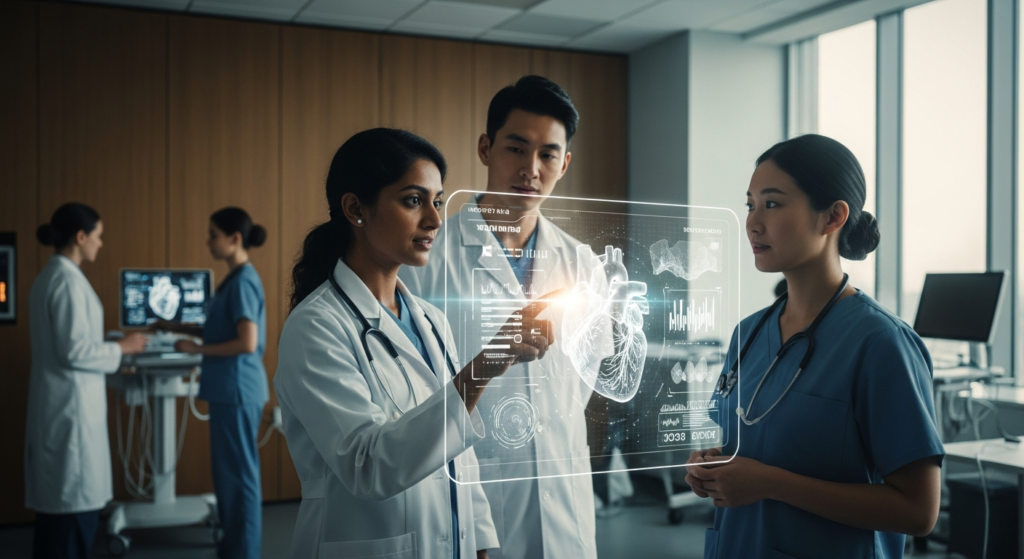
AI systems analyze medical images, lab reports, and patient data to detect diseases at early stages. In areas such as cancer detection and heart disease diagnosis, AI helps identify patterns that may be missed by the human eye.

Personalized Treatment Plans
AI analyzes patient history, genetics, and lifestyle data to recommend personalized treatments. This improves patient outcomes by tailoring medical care to individual needs rather than using a one-size-fits-all approach.
Benefits of Artificial Intelligence in Healthcare
AI brings several advantages to the healthcare system.
Improved Accuracy and Efficiency
AI reduces the risk of human error by providing data-driven insights. Doctors can make better decisions with accurate analysis and real-time support.
Faster Patient Care
Automation speeds up administrative tasks, allowing healthcare professionals to spend more time with patients. Faster diagnosis and treatment lead to improved patient satisfaction.
AI in Hospitals and Medical Operations
Hospitals use AI to manage resources, predict patient admissions, and optimize workflows. Intelligent systems help reduce waiting times and improve operational efficiency.
AI also supports remote patient monitoring, allowing doctors to track patient health outside hospital settings. This is especially useful for chronic disease management and elderly care.

Challenges and Ethical Concerns
Despite its benefits, AI in healthcare raises important concerns. Data privacy, security, and ethical use are critical issues. Medical data is highly sensitive, and protecting patient information must be a top priority.
Another challenge is trust. Patients and professionals need confidence that AI systems are reliable, transparent, and unbiased. Proper regulations and responsible development are essential.
The Future of AI in Healthcare
The future of healthcare will involve deeper integration of AI technologies. Predictive analytics, robotic surgery, and virtual health assistants are expected to become more common.
AI will also play a major role in preventive healthcare, identifying risks before symptoms appear. This shift from reactive to proactive care has the potential to save lives and reduce healthcare costs.
How FutureTechWay Explains Medical Technology Trends
FutureTechWay focuses on breaking down complex technologies into simple, understandable insights. Healthcare technology can feel intimidating, but clear explanations help readers understand how innovation affects real lives.
By covering future-focused topics like AI in healthcare, FutureTechWay helps readers stay informed about technology that shapes essential services.
Final Thoughts on AI-Powered Healthcare
Artificial intelligence is not replacing human care, but enhancing it. When used responsibly, AI improves medical accuracy, efficiency, and accessibility. The combination of human expertise and intelligent systems represents the future of healthcare.
Understanding these advancements today helps individuals prepare for a healthier, technology-driven tomorrow.
For more insights on future technology trends, visit the FutureTechWay homepage.