

As technology becomes a core part of everyday life, cybersecurity is no longer just a concern for large companies or IT professionals. In 2026 and beyond, digital security will be essential for individuals, small businesses, and online creators alike. From smartphones and social media accounts to online payments and cloud storage, our personal data is more exposed than ever.
Cybercriminals are becoming smarter, faster, and more organized. At the same time, users are relying heavily on digital platforms for communication, work, and entertainment. This article explains why cybersecurity matters more than ever, the most common threats people face, and how you can protect your digital life in a rapidly evolving online world.

What Is Cybersecurity in Simple Words
Cybersecurity refers to the practice of protecting computers, mobile devices, networks, and data from unauthorized access, attacks, or damage. It helps ensure that personal information, financial data, and digital identities remain safe from hackers and malicious software.
Cybersecurity is not just about complex tools or technical knowledge. It also includes simple habits such as using strong passwords, avoiding suspicious links, and keeping software updated. In the future, cybersecurity awareness will be as important as basic digital skills.
Why Cybersecurity Matters More Than Ever in 2026
The number of internet users continues to grow every year, and so does the amount of data being shared online. With remote work, online banking, cloud storage, and smart devices becoming normal, digital security risks have increased significantly.
Cyber attacks no longer target only large organizations. Everyday users are now common victims. A single data breach or hacked account can lead to financial loss, identity theft, or permanent damage to personal privacy. This makes cybersecurity a critical part of modern digital life.
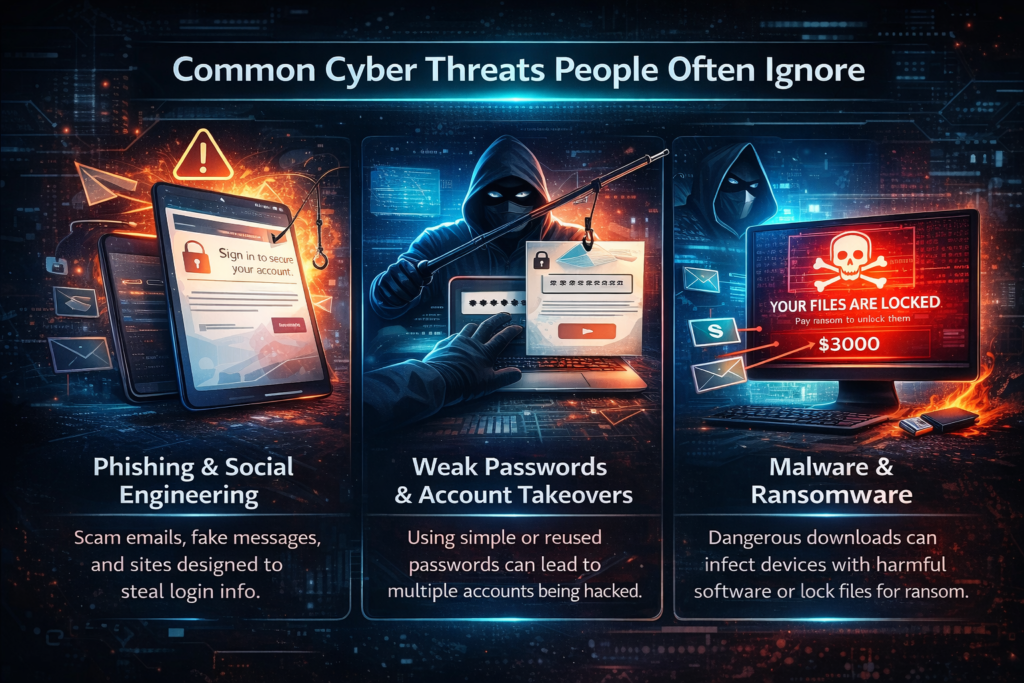
Common Cyber Threats People Often Ignore
Many users believe cyber attacks only happen to careless or unlucky people. In reality, even cautious users can become victims if they are not aware of modern threats.
Phishing and Social Engineering Attacks
Phishing attacks trick users into sharing sensitive information by pretending to be trusted sources. These attacks often come through emails, messages, or fake websites that look legitimate. As attackers improve their techniques, phishing messages are becoming harder to detect.
Weak Passwords and Account Takeovers
Using the same password across multiple platforms is one of the biggest security risks. Once one account is compromised, attackers can gain access to multiple services. Password-related breaches remain one of the most common causes of data loss.
Malware and Ransomware
Malicious software can enter devices through downloads, infected websites, or unsecured networks. Ransomware attacks lock users out of their own data and demand payment to restore access. These attacks are expected to increase as more people rely on digital storage.
How Cybersecurity Is Evolving in the Future
Cybersecurity technology is advancing to counter growing threats. Artificial Intelligence and automation are playing a major role in detecting suspicious behavior and responding to attacks in real time.
Future cybersecurity systems will focus on prevention rather than recovery. Instead of reacting after an attack occurs, advanced security tools will identify risks early and block threats before damage is done. Biometric authentication, behavior-based security, and zero-trust models are expected to become more common.
Simple Cybersecurity Practices Everyone Should Follow
You do not need to be a technical expert to protect your digital life. Small steps can significantly reduce security risks.
Use Strong and Unique Passwords
Create unique passwords for each account and avoid using personal information. Password managers can help store and generate secure passwords safely.
Enable Two-Factor Authentication
Two-factor authentication adds an extra layer of security by requiring a second verification step. This makes it much harder for attackers to access accounts even if passwords are compromised.
Keep Software and Devices Updated
Updates often include security patches that fix known vulnerabilities. Ignoring updates leaves devices exposed to known threats that attackers actively exploit.
The Role of Cybersecurity Awareness
Technology alone cannot stop cyber threats. User awareness plays a critical role in digital security. Understanding common scams, recognizing suspicious activity, and practicing safe browsing habits are essential skills in the digital age.
As more services move online, cybersecurity education will become increasingly important. Users who stay informed are far less likely to fall victim to attacks.
How FutureTechWay Helps You Stay Secure Online
FutureTechWay focuses on simplifying complex technology topics and making them accessible to everyday users. By providing clear explanations, practical tips, and future-focused insights, the platform helps readers understand cybersecurity risks without technical confusion.
The goal is not to create fear, but to promote awareness and smart digital habits that protect users in an evolving online environment.
Final Thoughts on Digital Security in the Future
Cybersecurity is no longer optional. As digital systems become more connected, protecting personal data and online identities will be a lifelong responsibility. The future belongs to users who understand technology and take proactive steps to secure their digital lives.
By staying informed, adopting basic security practices, and remaining alert to new threats, anyone can reduce risks and navigate the digital world with confidence.
For more insights on future technology trends, visit the FutureTechWay homepage.